Stay on Offense Climb Mountains

Attacking Adversity

  • Keep Moving Forward
  • Go Hiking
  • Ideas to Stay on Offense
  • Bookish Weapons
  • About Bill Montgomery
    • Log In
    • Membership Account
    • 1-Time Donation
    • Contact Coach Bill
      • Thank You & FAQ
  • Facebook

Go Hiking But What If You Can’t?

April 25, 2020 by Bill Montgomery Leave a Comment

Loss is not a fun topic, but I lost my hiking. The government shut down the trails die to the current Pandemic and I am sure with good intent and probably a lack of knowledge. The fact remains I can’t go hiking.

So what does someone do when they lose something they depend on for sanity and life? Be flexible and adapt!

The facts

So no hiking trails are available. Oh, and the gym is closed too. Not good. It is temporary, but how long this will last is anybody’s guess.

There are places you can walk just outside your door. Maybe even some hills, even steep hills. You might even get to know your neighborhood. That is what I did.

Be Creative And Flexible

So I created an at-home workout that is actually harder than the gym workout I did. I filled my backpack full of one-liter water bottles and use it for shoulder presses, curls, and squats. I just put another water bottle in it every week. After doing three rounds of multi exercises including Burpees, Turkish Getups, and sprints I go for a walk. The whole workout not including the walk takes an hour.

On Sunday, normal hiking day I do four rounds each being twice as long as during the week and then add an hour walk.

Loss is Hard

Even though I was able to put together a hard Sunday workout it is not as hard as a hike. I still miss hiking. Nothing really replaces it.

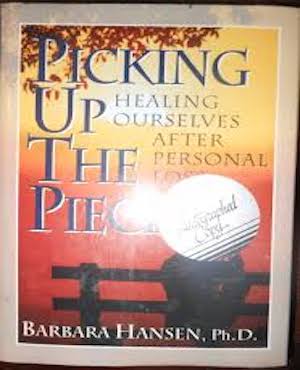
Like Barbara Hansen says in her book, Picking Up The Pieces,” “Loss is usually unexpected and unwanted.” You have to be careful not to go into denial at least permanently, and make room for anger. All of the emotional turmoil has a place.

Of course, we aren’t talking about losing your ability to walk like Barbara. It is just not being able to go hiking. Poor me! But the process is the same.

Silver Linings

It is always important to look at silver linings in every loss. You can find them. I discovered that I don’t need the gym as much as I thought and that I will be changing my gym workout when I go back to make it tougher.

Not hiking saves wear and tear on my car and saves gas money. Not hiking saves me time to do other things I never seem to have time to do. Finally, not hiking makes me appreciate hiking, even more.
Filed Under: Go Hiking, Keep Moving Forward Tagged With: adversity, emotions, hiking, life, mountain, self-help, struggle, success

Bookish Weapon Number Forty

April 25, 2020 by Bill Montgomery Leave a Comment

Today we are going to revisit the author Barbara Hansen by looking at another one of her other books, “Picking Up The Pieces.” We looked at “The Strength Within,” in another Bookish Weapon post.

In this book, Barbara explains what happened to her when she was nineteen years old and how that changed her life. Then she discusses the things that allowed her to thrive in the future. She says her realizations can be life-changing for us. Here are a few.

Time Doesn’t Heal Us: We Heal Ourselves

We choose how we respond to loss. She says, “I am convinced that we’re destroyed not so much by forces outside ourselves as by forces within.” We choose how we respond to loss.

She dislikes the phrase “Time Heals” and says it implies “that id we just keep breathing long enough our sorrow and grief will vanish. Nonsense. I’ve watched too many people walk through loss to accept the idea that “time heals.” The more accurate statement is “time numbs.”

Develop Internal Resources

Barbara discusses five internal resources that we can develop. These are so helpful.

Believe in your own uniqueness – “…affirm that life indeed has a pattern and determine how we fit into that mosaic.
Discover Success is Intangible – “…It is what we are and not what we have that makes us successful.”
Listen With Love – Focus on others and listen to there problems
Live Life In Small Slices – Live in the moment and not for the moment diminishes our pain.
Invest In Solitude – Get acquainted with your internal self and discover new strengths.

Exploring Some of These Five

She has a personal theology where she believes God is Love and she is a channel of that Love. This gives her meaning. And she says no matter your religious beliefs: “each of us is a tiny piece of the mosaic of life. Before we can successfully walk through a loss, we need to affirm that life does indeed have a pattern and determine how we fit into the total picture.”

She goes on to say that she believes she is a valuable piece in life’s pattern. A loss does not erase a person’s uniqueness. “Believing in your own uniqueness gives you the strength to pick up the pieces.”

She measures her success by asking herself the following questions:

Am I a loving, kind, caring individual?
Am I filled with inner peace, serenity, and stability?
Am I positive, joyful and content?
Do I like the person I am becoming?
Do I welcome each day?
Do I laugh easily?
Do I enjoy my friends and family?
Do I have a good relationship with God?
Do I have something to hope for, a goal I’m working toward?
Do I have someone to love?

These are fantastic questions to ask yourself even if the answers might make you very uncomfortable.

This book is out of print, but there are used copies available from time to time. If you can find it get it. There is so much more in the book.

Filed Under: Bookish Weapons, Ideas to Stay on Offense Tagged With: adversity, Bookish Weapons, emotions, exercise, hiking, self-help, struggle, success

Bookish Weapon Number Thirty-Eight

April 11, 2020 by Bill Montgomery Leave a Comment

John Mark Comer’s book, “The Ruthless Elimination of Hurry,” is a tough one for me. On the book cover the word “Hurry” is crossed out. Gone. This kind of goes against my philosophy. I am always saying, go fast up that mountain.

Actually I am always rushing through things to the point where they are incomplete or shoddy (maybe even this post). I am not sure if I am hurrying toward something or away from something. But never mind that, let’s take a closer look at this book.

Level Seven

In just the first few pages the book taught me something about myself that I didn’t know. I am a “Level Seven.” That must be from these video games that the young whippersnappers play twenty-four hours a day. Ok, I confess, we even had levels back in “Space Invader” days. Anyway, Comer sounds a bit alarmed that he just hit thirty and that meant he was a level three. I am halfway into my seventies so I guess that makes me a level seven and maybe even a seven and a half.

What could be better than being a level seven? The higher the level the more of a master at whatever game you are playing, right? Thanks, Mark!

Hurry Hurry Hurry

Comer or should I respectfully say Pastor Comer, alarmed himself when he realized he was rushing through life. His mentors (maybe level sevens, you think?) told him that he should do everything he could to eliminate hurry in his life. One of the mentors, Dallas Willard, is quoted: “There is nothing else. Hurry is the great enemy of spiritual life in our day. You must ruthlessly eliminate hurry from your life.” Sounds good on the surface.

Being a Pastor he says Jesus was unhurried and therefore if you follow his “Way” you should strive for that as well. Sounds good to me. Even below the surface. Hurry is the great enemy of the spiritual life as Willard says above. Well, can you imagine the current Dali Lama running someplace?

The Evidence

He goes on to make a real case for how unnecessarily hurried our society has become. Smartphones, crammed schedules, rushing here and there.

Comer asks if you think you might suffer from any of a number of things like irritability, hypersensitivity, restlessness, workaholism, emotional numbness, out-of-order-priorities, lack of care for your body, escapist behaviors, slippage of spiritual disciplines, and isolation. Guilty?

The Answer

Comer provides you with a solution to all these problems. They are being silent and solitary once a week. It is called the Sabbath in religious terms. He makes a great case for it if you are Christian and I like to think I am one so of course, I feel guilty for not practicing it. We call that being “convicted.” Simplicity is the second. Have you heard of minimalism? Slowing is the third.

All these practices make sense for everyone, not just Christians. You all know about minimalism so I don’t think I have to belabor that. Sell or give away what you don’t need and don’t buy what you don’t need. Slowing is more interesting.

With “Slowing,” he suggests some practices. They include driving the speed limit, getting into the slow lane, get into the longest checkout line at the grocery store ( I tried, I really tried), get a flip phone or ditch your phone altogether, kill your TV (got that one right), walk slower (NO), and journaling (of course).

I left out a lot, but you get the idea. It may take me a while to implement more of these, but I think it will be worth the effort.

Filed Under: Bookish Weapons, Ideas to Stay on Offense Tagged With: adversity, Bookish Weapons, christian, emotions, hurry, life, meaning, self-help, struggle, success

Bookish Weapon Number Thirty-Eight

April 4, 2020 by Bill Montgomery Leave a Comment

“You Matter,” is written by Matthew Emerzian and is an attempt to persuade you of three things. First that you indeed do matter, second that others matter too and third, that all of us together matter. I thought it was well presented with some fun stories in it as well.

You

It is basically the idea that you are unique and as such can have an impact. Your uniqueness means you matter. Everybody can make a difference in the world just by being alive. He puts it this way, “You matter because you are unique. You matter because you are a gift to the world. You matter because you are one in some eight billion. You matter because you are a mom, a dad, a brother, a sister. You matter because you belong here.” Nicely said, Matt!

He says that you should find a song that is “your song” and play it all the time. I liked that. He calls it “your official song.” That is a good idea. Do it.

He also asks you what matters most to you. He has you make a list. He says, “What matters most to you is what you spend most of your time and resources on. Are you spending most of your time and resources on things that bring you joy and feel authentically “you?”

Others

“Life is not meant to be done alone.” That is a real kick in the butt for me. I have been alone for over thirty years. Oh well. He goes on and makes a case for this and he is right I am sure.

He discusses being creative and doing things for other people. Writing to them. I liked his idea of writing a note to people that are most important in your life. A little appreciation note. Great idea. He also suggests you write a letter to yourself.

We

Emerzian tells the story about how he was afraid of flying and what ultimately got him past that was internalizing the idea that his “mission” to help others was more important than his fears. One significant event that helped him was having a woman tell him he prevented her from committing suicide. That would certainly do it for me. Then he asks what fear you might have that prevents you from being of service.

He tells you to ask your self these questions, “What is the one thing you hate about your community? Great. What are you doing to change it.”

This was a decent book. I think his attempt at helping people realize that they matter didn’t have much heart in it. His passion it seems is with helping others and that’s good.

Filed Under: Bookish Weapons, Ideas to Stay on Offense Tagged With: adversity, Bookish Weapons, emotions, meaning, self-help, success

Bookish Weapon Number Thirty-Six

March 14, 2020 by Bill Montgomery Leave a Comment

Gary John Bishop is an interesting character and the author of the book, “Stop Doing That Sh*t.” It is a self-help book. You wouldn’t pick it up unless you thought you needed to help your self in some way, especially if you thought you needed to stop doing something.

It is a book that approaches self-sabotage in a different light than what I have read in the past. It is not for everybody. There is, of course, lots of bad language and he doesn’t apologize for that. After all, he also wrote the book, “Unfu*k Yourself.”

The Dedication

I liked his dedication. How many of you just skip over a dedication in a book. It isn’t what you are after or so you think. However, I thought it was well said in this case so I will share.

“I dedicated this book to the helpless and hopeless, the frustrated and defeated: today is a day when it can all begin anew. I don’t care about your past, and you shouldn’t either.”

Good, right? So if you are helpless and hopeless this book might be one you should read. But you say you have lots of hope! Hope that your car doesn’t break down again because you can’t afford to get it fixed, Hope that you can pay the rent. Hope you don’t get sick. You get the gist of this, lots of hope. Right!

Your Center

Bishop calls it your core and asks what is at the core of every human. His answer is “bullshit.” That’s pretty original and a lot different than other answers you would get from self-help gurus.

I really liked what he says about self-talk. “Your self-talk is the locker room of your life.” And he goes on to elaborate:

“People are little more than a living conversation, both internal and spoken. A dialogue in a body. A skin-and-bone bag that talks, and it talks about everything, and the limit of that talk is the limit of that life. Period.” The bold is mine. He says it is not the horrible life you have but the conversation you are having about it that has you by the throat.

Self Sabotage

This is a large part of the book so I will be taking bits and pieces from it. Please read the book if you want to get more out of it.

I liked a quote he reproduces from the writings of Marcus Aurelius’s writings, “The soul becomes dyed with the color of its thoughts.”

There are three saboteurs. “The three saboteurs are the fundamental conclusions you have come to about yourself, other people in your life, and life itself.”

The Question

Bishop asked himself the question, “Why is my life the way it is?” It is a decent question. Have you asked it yourself? Maybe your life is perfect. If so Bishop would ask why you were reading his book. Anyway, he came up with some reasons.

He says that if you want to accomplish some things you have to get used to see other things. He puts it this way, “Whatever you are out to accomplish in this life, you’ll have to get more than a little okay with the experience of struggle or hell, even overwhelm.”

Also, he claims that those who survive are those that are the best predictors. “Every Monday morning is the same because you are already predicting how it will go before it even starts.” He says you have an opinion about how everything is going to go. Your subconscious is responsible.

I like what he says here. “Circumstances may change, but what stays the same is how you see them, as well as how you deal with them and ultimately how you participate in life.” He goes on, “Your entire life to this point has been a series of actions subconsciously driven to trap you in the same bubble of life.”

He says your “subconscious is working you like a sock puppet.” I thought that was pretty funny. He says people are more concerned with fixing themselves than improving themselves.

The Three Saboteurs

You have a way your subconscious views yourself, other people and life. Bishop takes you through the steps find our what those are for you. These are your established truths. I liked that part of the book.

He says, “You? You’re victimizing yourself into a truly forgettable life. Like most people, you’d rather explain your life than intervene in it.” “Your actions are always in alignment with your conclusions.” Of course, he is talking about your conclusions regarding yourself, other people and life. He goes on, “Day after day, week after week, year after year, you see yourself in the same way, you see others in a very distinct way and you see life in the same way you always see it. Talk about predictable.”

He says you form these conclusions in your first two decades of life. Twenty is fifty-four years ago for me. I can’t remember what conclusions I had come to at that time. I think for me the most negative conclusions about these three things came much later in life.

Once you dig down and discover what these are for you, he tells you that you can’t change it. And here is where we disagree. He says the solution is to focus only on the future and do what your future tells you to do. What? Maybe that’s good for younger people but not when you are creeping up on the average life expectancy.

However, the book has some great insights about life so I highly recommend it.

Filed Under: Bookish Weapons, Ideas to Stay on Offense Tagged With: adversity, belief, Bookish Weapons, emotions, meaning, reality, self-help, struggle, subconcious, success

Bookish Weapon Number Thirty-Four

February 29, 2020 by Bill Montgomery Leave a Comment

The book “Search,” was published in 1985, but had a great impact on me at the time and I believe it is a bookish weapon you too can use in life.

It is a summary of what he was teaching at his workshops at the time. Janes Kavanaugh was a Catholic Priest and a poet and a writer who taught what he believed. I read this book the first time right after my first divorce.

Present Feelings

“When we deny strong feelings as I did for twenty or thirty years, they take their toll at some point in bodily symptoms, disease, depression, or consistent unhappiness,” says Kavanaugh. He talks about a young woman he saw at the store and how she looked sad and in despair, but would not communicate it to anyone. “She will dream of some magical solution, seek her release in novels or movies or the soaps, and join the parade of the empty and miserable.”

He discusses how “Searchers” are different than the woman above. They want to live a life that reflects who they are and are aware of danger signs of suppressed feelings. He says, “Self-healing begins with an awareness of what we are feeling. To know our feelings without editing or qualifying, without classifying them as good or bad.”

Kavanaugh says, if our image of ourselves refuses us the right to be angry or even unpleasant, our own kindness will probably kill us. Or if our self-image prevents us from being gentle and soft and even afraid, we will wall ourselves off from the world in a private tomb.” “…corroded feelings are the great murderers,” says Kavanaugh. He just says we should be aware of our feelings and that “Search” can teach us to grow up and take responsibility for our present feelings, to “get rid of the ghosts.”

Dependence and Interdependence (Chapter 2)

This section of the book I underlined over and over. On the subject of dependency, I underlined this: “Many of us are thrown back upon ourselves through a ruptured relationship, a job loss, or poor health. The child in us begs for someone to take the pain away.” “…the dependent child can be a killer!”

He goes on and I underlined this as well: “A solid friendship or committed love is an interdependency wherein we meet one another’s needs. That’s what life is all about. Total independence can b a mask for one who fears any dependence and intimacy. We need each other. We need to reach out, to share the burden of living, to find the helping hand when we are lost and alone.”

Meeting Our Own Needs (Chapter 3)

“Search” continually talks about the “long game”,” about imagining our life a year from now, if we do not take responsibility to meet our own needs. God or an inner spirit speaks to us through our needs.” He makes the point that if you ignore your needs for a lifetime you will end up alone or lonely.

I really liked Kavanaugh’s poetry which is interlaced throughout the book. Here is a bit from the poem, “Personal Freedom.”

“ Stand back from life and observe it at a distance.
What makes sense and what imprisonment?
Who knows consistent freedom and who follows a path
Made by ants following ants in proscribed procession?
I have no idea where I must live or how,
No blueprint made in Japan or heaven,
Only heart and mind that know what is true and false,
And what it is to feel the pulse of freedom,
Without which, for me, there is only a premature death.”

Indecision

When it comes to mental health and indecision. He says, “We can decide to communicate honestly no matter the cost, to begin to be who we are to the extent that we can. There is no deadline, no rule of thumb the covers everyone. Many of us have been taught so intensively to think of others that it takes us years to respond to ourselves.”

Then when people live life under others heal he has this to say, “When we have been put down enough or have suffered enough personal degradation, our anger can be an important ally to rescue us. Often we forget that anger is a powerful part of our emotional makeup and it can save us from self-annihilation. When summoned, anger often enables us to respect who we are and becomes a significant source of self-love.”

Here is a summary of what he is saying about decisions: prolonged indecision can lead to serious illness, decisions follow from unmet needs and practical options, a bad decision is often better than no decision and play the long game. All of these are good to remember.

Loneliness

Personally, I enjoy solitude. I am rarely lonely which is a good thing because I spend most of my time alone. Kavanaugh says, “Loneliness can almost devour the sensitive and aware and cause a deep-rooted fear of abandonment and a diminished sense of self-worth.” He says of single people that, “The freedom they chose becomes another kind of prison.”

I think he makes too much of it. He talks about people exploring meaningless relationships but are still alone. I say enjoy your solitude. It is a precious gift.

Support Systems

One of the key parts of this book is when he discusses support systems. He says and I agree, that, “…the essence of a support system is to establish genuine and solid strength within oneself.” This is so important. If I did not have this strength I would not have made it this far.

Beginning again, say after a divorce or even a breakup is difficult. I like his poem about it:

I cannot begin again
To study the veins of granite rocks
And explore the anxiety of clouds
To relearn the secrets of the trees
And see the shadows of mountains.
There are too may forms already seen,
Too many sounds heard too often,
Too many dreams etched in my memory like water scarring ancient foundations.

This is not all of the poem. You need to find the book and read it. If you can’t find the book, let me know and I will give you the rest of it in one of these posts.

Filed Under: Bookish Weapons, Ideas to Stay on Offense Tagged With: adversity, Bookish Weapons, decisons, emotions, feelings, meaning, Needs, self-help, struggle, success

  • « Previous Page
  • 1
  • 2
  • 3
  • 4
  • 5
  • 6
  • 7
  • Next Page »

Live the Life You Deserve

* indicates required

Attacking Adversity

[the_ad id=”192″]

Recent Posts

More Book Summaries

It has been some time since I have done any book reviews here, but that will be changing. Also, hiking season is almost here so more pictures. I will be turning 80 in a few months so it should be … [Read More...]

Go Hiking And Build Your Best Life

Hiking for me is the best part of living the life I want. Being in nature, challenging my body, moving. If you hike you know it can become an important part of your life. At 78 I ask myself, “Will … [Read More...]

Bookish Weapon Number Seventy-Three

Arthur Brooks has written a book that not only includes useful advice but I really like the cover which includes mountains and someone (I imagine it is me) standing on top of one. What better … [Read More...]

Copyright © 2026 · Log in

X
Subject:
Message:
Ajax loader
Share with friends
Share on Twitter Share
Share
Share on Facebook Share
Share
Share on Linkedin Share
Share
Share on Reddit Share
Share
Share on Pinterest Share
Share
Share on Digg Share
Share
Share on Tumblr Share
Share
Share on Whatsapp Share
Share
Share on Weibo Share
Share
Share on Stumbleupon Share
Share
Share on Flipboard Share
Share
Share on Email Share
Share
Share on Print Share
Share