Stay on Offense Climb Mountains

Attacking Adversity

  • Keep Moving Forward
  • Go Hiking
  • Ideas to Stay on Offense
  • Bookish Weapons
  • About Bill Montgomery
    • Log In
    • Membership Account
    • 1-Time Donation
    • Contact Coach Bill
      • Thank You & FAQ
  • Facebook

Bookish Weapon Number Fifty-Three

February 21, 2021 by Bill Montgomery Leave a Comment

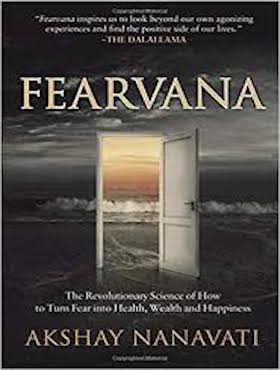
Author Akshay Nanavati has written a bookish weapon without him even realizing it. That’s ok. What a bookish weapon it is! In his introduction this former Marine sets the tone for the book. He says, “we all do the best we can with the level of skills, abilities, knowledge and awareness we possess at any given time.” He credits Jack Canfield for this, but follows it up by saying, “Any time you might be feeling confused, lost, or scared, it is not your fault.” Akshay also hikes! Actually he is a mountaineer which is far more impressive.

What is “Fearvana?” It is when you feel the fear or anxiety, then take action and you succeed. He give es the example of getting all nervous and afraid before going on stage, but then running out onto the stage and knocking it out of the park. That’s Fearvana.

Why Do We Do The Things We Do?

This is the title of chapter two. In it the author describes seven reasons for our actions. A couple of these stood out to me, but you should read the book because the others are important too.

The two that I enjoyed were “The Law of Love and Hate,” and “The Top-of-Mind Rule.” The first is a name he gives the filter of our animal brain. “It states that our gut feelings of love and hate determiner decisions and our views of the world.” The second is explained this way: “The easier it is to recall something from memory, the more likely our brain deems it important or commonplace…Whatever is on top of your mind is more likely to have an impact on your perception of reality.”So what can you do about all this? Akshay says, “By utilizing your human brain to make conscious decisions, you can literally change the physical structure and functions of your animal brain. Your cognitive biases won’t disappear, but you can change the way they operate for you.”

Real Freedom

The author believes that our only real freedom consists of our “ability to separate ourselves from suffering to create our own empowering reality.” So he says, “..it does not matter what you might be struggling with or how it might compare to other people’s suffering. Don’t waste your time and energy in the destructive downward spiral of second dart syndrome.” And what is the “second dart syndrome?” It is from Buddhist philosophy that says when we experience pain or suffering, it is the result of two darts. “First darts are the ones beyond our control…Second darts are the manner in which we react and respond to the first ones.”

It is all internal. “What we do inside our minds, the conversation we have with ourselves, that is what shapes our reality. Our mindset determines how much we suffer.You have the power and the freedom to choose how you interpret the world. That interpretation will control the quality of your life. If you don’t exercise this freedom, your brain will create its own interpretations without your awareness.”

LMNOP

Easy to remember, right? I liked it too. Of course, each of those letters stand for something. When something negative happens and you feel an emotion use these. L-label and language. Label the emotion to release yourself from the impact. M-Find the meaning you have attached to the event or emotion. You control the meaning. N – It’s not you. It’s your brain. You are just stuck in a pattern. “It is not who you are.” I guess N is for “Not.” O – Opt out for a more empowering meaning. Give the emotion or event or both a new meaning, P- Purpose and Preemptive strikes. The important thing in this step is to the action . Do something different the before. It builds new brain patterns.

LMNOP is a great tool for helping you get past an experience or emotion.

Changing Your Past Memory

He discusses how to change a past negative memory. Get yourself in a positive state, and then “going into you past, you can change the effect the past has on you today.” This was most interesting. This is all under a section called. “Your Past Is A Lie.” You need to do this in a six hour window. So “to change the past we need to activate a memory from an optimistic present state and modify it within six hours. Your past helped shape the fears that keep you imprisoned in your present, so altering your memories is often a necessary step to move from fear to Fearvana.”

Get the book for the complete process.

Positive Suffering

That’s my title. The author talks a lot about suffering and says, “Unending bliss awaits us within the simplicity of going to war with ourselves.” He says, “…people with high levels of stress without depression are some of the happiest people in the world. They are also the people who are most likely to view their lives as meaningful.” He stresses the need to prime your subconscious mind to embrace struggle.

I like what he suggests when you face a challenge. He says to ask, “What is fun about this? How can I make this enjoyable?” “Visualizing the process of struggle, as opposed to the outcome on the other side of it, better prepares you to overcome the struggle.”

That’s a quick look at the book. I didn’t even tewl you about the section entitled “The Most Important Habit Of All.” Get the book and read about it!

Filed Under: Bookish Weapons, Ideas to Stay on Offense Tagged With: adversity, Bookish Weapons, emotions, fear, meaning, preparation, self-help, success, visualization

Go Hiking and Change Your Personality

September 7, 2020 by Bill Montgomery Leave a Comment

Well, it could happen! Especially if you have not done any serious hiking before. Maybe you have just been a “nature walker.” Now you are enjoying the scenery but also maximizing the exercise. It could have a significant impact on who you are.

So let’s break it down shall we and see if there might be something to this. At the very least it could mean a positive change in the right direction.

Preparation

When you take on a serious week after week hiking schedule there needs to be some preparation. You need to prepare for the season and then every week get prepared for that week’s hike. If you were the kind of person who sort of lets things happen, having to prepare will change you. It might even bleed into your everyday activities.

After preparing for hiking becomes ingrained as a habit you may find yourself arriving early for meetings because you had thought through how long to would take you to get there and possible anomalies that might slow you down.

The Top Is the Target

If you are not into goal setting before you start hiring regularly, hiking could be just the thing you need to get you started.

Getting to the top is the payoff on any hike. How fast you get there is also a payoff especially if you beat your former time. So you always have two goals. First to make it to the top and then to get there in record time.

Doing this every week makes it easier to set a sales goal or meet a deadline at work. If you are always looking for a “new” top to conquer maybe you will start a company and change the world.

Did It Change?

Let’s say you have been hiking all summer, week in and week out. Have you changed? Sure you have. You can’t do that without changing. Now you are fitter. You are used to being prepared for everything. You are never late. Your whole personality changed for the better.

Filed Under: Go Hiking, Keep Moving Forward Tagged With: adversity, goals, hiking, life, mountain, preparation, self-help

Go Hiking And Attack Adversity

March 7, 2020 by Bill Montgomery Leave a Comment

What are you doing when you go hiking, but attacking adversity? Every log, rock, even every step is an adversary. You have to overcome them. Subdue them. Conquer them. Attack them!

Being on offense is key to climbing a mountain. It is faster too!

The Trail

Every trail is different and has its own challenges. Attacking it needs to be nuanced according to its particular obstacles. Any offense needs tactics. If the hardest part of the hike is the last two miles you might want to conserve your strength.

Alpinists say it is one thing to get to the top of a mountain, but you need to remember that you are going to have to have energy left to get back down the mountain. This isn’t such a big problem when you are going on a typical hike, but it is something to keep in mind.

The Weather

When it is cold and the snow is blowing, how do you keep yourself from just turning around and heading for the car? You do it by having that offensive mindset. You beat that cold into submission.

It also helps to have the proper clothing. When it is cold you do not want to overdress. If you do it will cause you to sweat and then you will get even colder. Actually, on shorter hikes, it doesn’t matter as much because you won’t be out in it the long.

As I have said before be sure to have cold-weather gear like Yaktraks or Microspikes. Most mountains do not require regular Crampons.

The Mindset

You need to be ready for anything the mountain can throw at you. Mentally ready! It is a mindset. Get yourself psyched up for the hike. It is just like a motivational rally where people are standing on their seats chanting or singing, but it is all inside your head.

How to do this? Use triggers. Find something simple like preparing for the hike. Looking at your pack, your boots. Getting everything set up. That is what triggers me. Then it is game on.

Go hiking!

Filed Under: Go Hiking, Keep Moving Forward Tagged With: adversity, exercise, hiking, life, mountain, preparation, self-help, struggle, success

Bookish Weapon Number Thirty

February 1, 2020 by Bill Montgomery Leave a Comment

Dan Carlin has the best podcast on history in the history of the world! Now he has a book. The title of the book is, “The End Is Always Near.” It is not the most uplifting subject you might be able to imagine, but it does hold your attention and is certainly timely with the new Coronavirus from China making the news. Is it a bookish weapon. Sure! It prepares you.

Anything Carlin would write of course would be about history and his point, I believe is that over the course of time the “end” has come again and again to civilizations. Hence it is always near. However, if you think his title is too morbid, he says he had an alternative title which was, “And They All Lived Happily Ever After.”

Scary Chapters

If all I did here was to list the titles of Carlin’s chapters it would be enough to get you to crawl back under the covers. So let’s do that!

Chapter 1 – Do Tough Times Make for Tougher People? (not scary, maybe positive-sounding)
Chapter 2 – Suffer The Children – (we are warming up here)
Chapter 3 – The End Of The World As They Knew It (now we are talking)
Chapter 4 – Judgement at Nineveh (this is not the biblical Jona story)
Chapter 5 – The Barbarian Life Style (interesting – certainly not scary)
Chapter 6 – A Pandemic Prologue (Very timely. I am going back to bed)
Chapter 7 – The Quick And The Dead (crawling back under the covers)
Chapter 8 – The Road To Hell (Can’t get any scarier than this)

Just by scanning the table of contents you get the idea. Pretty thought-provoking material.

Tough Times

Carlin discusses the great depression, the Second World War (which came right after the depression), the Blitz in London where the Germans dropped bombs for eighteen months. Then he talks about nuclear weapons. He speculates if people from the “Greatest Generation” were by percentage tougher than those of today. My guess is that it would be a higher percentage than what Carlin says.

“Perhaps we’re living in a time when toughness in the old sense doesn’t matter as much as it used to. If that is the case, then what advantages might a “softer” society have over a tougher one?” asks Carlin. I don’t think there are any advantages and I doubt Carlin does either.

He discusses how the Spartans, who were known for their toughness became “luxury-loving and corruptible.” If it can happen to the Spartans it can happen to any society.

The Children

It was really tough for children in the past. Even for those of the Great Generation who grew up thinking corporal punishment was ok. Take a look at some of the ways their parents punished them: “whips of all kinds, cat-0-nine-tails, shovels, canes, and Iron and wooden rods.” I knew a girl who’s father would beat her with a horsewhip and a boy who’s father beat him with a razor strap (he was a barber). Of course, my Junior High School Principal had one of those paddles with holes in it that would raise blisters and I had a math teacher that threw me up against the wall. My parents did call the school about that, but only because he tore my shirt.

In prior generations, children were sold, says Carlin. They witnessed torture and violence of all kinds. Mothers didn’t nurse their kids. They had wet nurses do it.

The Ending of Civilizations

The Bronze Age ended quickly and Carlin says historians argue about what happened and how it happened. It could have been a number of things or one thing. Read the book

Nineveh was an ancient city mentioned in the Bible. It was destroyed in spectacular fashion all at once. Carlin says the locals living in the area didn’t even know how it happened.

Carlin discusses the Roman Empire and what happened to them. It was interesting how the Roman legions became more and more germanic.

Plagues

Carlin speculates about how the reformation of the Catholic Church may have been at least partially due to plague deaths, because the plague killed most of the officials in the church so they had to replace them with very young inexperienced men who had no one left to teach them. This then led to all sorts of nastiness.

Carlin says, “We can’t know how many in all died. While estimates put the figure at 75 million, countless out-of-the-way farms and towns and even cities may not have been included in the final toll.”

Atomic Bomb

Then Carlin begins to discuss the bomb. I was born six days after the very first atomic bomb was detonated and one month after I was born the United States dropped one on Japan. It has only been 74 years since then and that is not very long if you consider the scope of history. Carlin wonders how long we can keep a nuclear war from happening.

He recounts the Cuban Missile Crisis and discusses what was said in meetings with Kennedy and his staff. It made the hairs on the back of my neck stand up. I recall riding home on the school bus wondering if we were all going to get nuked.

As usual Carlin makes history more interesting by considering the human side of it. Get this book and read it. Then you won’t be so surprised at what might be coming just around the bend.

Filed Under: Bookish Weapons, Ideas to Stay on Offense Tagged With: adversity, atomic bomb, Bookish Weapons, Coronavirus, death, discipline, disease, preparation, reality, struggle

Bookish Weapon Number Fourteen

August 31, 2019 by Bill Montgomery Leave a Comment

Today’s Bookish Weapon is from Ray Dalio’s book, Principles. It is arguably one of the best business books in print. Dalio’s biography is stunning. A billionaire investor and hedge fund manager. He knows how to make anything more successful. I am going to look at his take on making decisions, but I highly recommend you read the whole book.

Decisions – Broadly Speaking

So you need to make a decision about something. Something important. How do you ego about it from Dalio’s perspective. He says, “Know that coming up with the right questions and asking other smart people what they think is as important as having all the answers.”

So ask some smart people what they think. Get someone else’s perspective. This is always good advice.

Process

There is a two step process second for making decisions says Ray. First take in all the information especially apposing views. Second, decide!

He says that, “You are looking for the best answer not simply the best answer you can come up with yourself.” Find people that have been successful over time and ask them.

Always plan for worse case scenarios as much as possible. The old 2 is one and 1 is none.

Upper Level and Lower Level

You need to understand what level your conversation is on. If it is about a sub-point then that is a lower level conversation. If it is a main point, that is upper level, and he says, “decisions need to be made at the appropriate level, but they should also be across levels.”

He slices it for sure. He is very detailed in his decision making. He says that most people focus on the lower level points and make decisions based on them and those decisions are inferior.

Bets and Probability

“Make your decisions as expected value calculations. Think of every decision as a bet. Reward times probability of occurring is greater than penalty times probability of occurring.” The book gets into more detail so read it.

He also points out that it is “Not always best to bet on what’s more probable. The best choices are ones that have more pros than cons, not the ones that have no cons.”

Consequences

Have you considered all the consequences of your decision? Dalio says you must consider second and third level consequences. So look at how this decision will impact you in three years. Who will it impact and what will be the consequences for them in three, five, the years. Go deep! Most people only look at first level consequences, so don’t be like most people.

Filed Under: Bookish Weapons, Ideas to Stay on Offense Tagged With: adversity, Bookish Weapons, consequences, decisons, preparation, probability, self-help

Go Hiking and Climb Kendall Katwalk

August 31, 2019 by Bill Montgomery Leave a Comment

Depending on where you look Kendall Katwalk is between 10 and 12 miles round trip. I believe it is 12. It is an easy hike in terms of the elevation gain of only 2,600 feet, but it is a long hike, especially if you extend it. You can hike as far as you like on the Pacific Crest Trail and it is tempting.

So Easy

The trail begins flat and continues that way for a while. Then there is a gradual increase in gradient, never really getting “steep.” If you go early enough so you are hiking at sunrise you will see light shine off peaks in ways the take your breath away.

It is almost like strolling through a park until you get past the avalanche shoot. Then it gets a little steeper.

Rocks

Yes there are rocks, but not like Mt. Pilchuck. Still you really need some good hiking boots for these things. You will probably hear or see Marmots.

The rocks and the distance do wear on your feet, so even though it is not steep, it is challenging.

From Civilization To Wilderness

For most of the hike you can hear or see the Freeway. There are great views of peaks and even Mount Rainier. You can look down on the Snoqualmie Ski slopes. However, I never really feel like I am in the mountains until I get to Kendal Katwalk. Once you cross over to the other side it is a whole new experience and as I mentioned, you can continue the hike for miles. I have gone as far as Joe Lake, which makes the trip about 20 miles round trip. Extending it just a couple miles will bring you to a couple of beautiful lakes that make it worth it.

Filed Under: Go Hiking, Keep Moving Forward Tagged With: adversity, aging, hiking, life, mountain, preparation, self-help

  • « Previous Page
  • 1
  • 2
  • 3
  • Next Page »

Live the Life You Deserve

* indicates required

Attacking Adversity

[the_ad id=”192″]

Recent Posts

More Book Summaries

It has been some time since I have done any book reviews here, but that will be changing. Also, hiking season is almost here so more pictures. I will be turning 80 in a few months so it should be … [Read More...]

Go Hiking And Build Your Best Life

Hiking for me is the best part of living the life I want. Being in nature, challenging my body, moving. If you hike you know it can become an important part of your life. At 78 I ask myself, “Will … [Read More...]

Bookish Weapon Number Seventy-Three

Arthur Brooks has written a book that not only includes useful advice but I really like the cover which includes mountains and someone (I imagine it is me) standing on top of one. What better … [Read More...]

Copyright © 2026 · Log in

X
Subject:
Message:
Ajax loader
Share with friends
Share on Twitter Share
Share
Share on Facebook Share
Share
Share on Linkedin Share
Share
Share on Reddit Share
Share
Share on Pinterest Share
Share
Share on Digg Share
Share
Share on Tumblr Share
Share
Share on Whatsapp Share
Share
Share on Weibo Share
Share
Share on Stumbleupon Share
Share
Share on Flipboard Share
Share
Share on Email Share
Share
Share on Print Share
Share