Stay on Offense Climb Mountains

Attacking Adversity

  • Keep Moving Forward
  • Go Hiking
  • Ideas to Stay on Offense
  • Bookish Weapons
  • About Bill Montgomery
    • Log In
    • Membership Account
    • 1-Time Donation
    • Contact Coach Bill
      • Thank You & FAQ
  • Facebook

Bookish Weapon Number Twenty-Four

December 14, 2019 by Bill Montgomery Leave a Comment

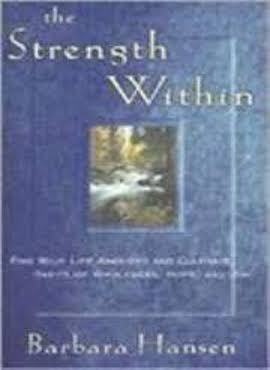
This book by Barbara Hansen had a profound impact on me at a time when I was struggling so I am hoping it will be useful for you as well. With that in mind, I will highlight a few of my favorite parts of the book.

First, however, I think the author’s back story is important. She was paralyzed at 19 years old and spent the rest of her life in a wheelchair. She describes some of her challenges including getting out of bed every morning using an elaborate hoisting method. Then she loses her home in a storm. So she is very qualified to discuss overcoming adversity.

Internal Resources

Hansen’s main focus is on developing internal resources to handle life’s difficulties. She talks about creating a “steel core of spiritual strength. There are three important first steps she discusses: 1) Process the pain of the past 2) Choose our response to reality 3) Stop making ourselves victims. She says, “By changing our thoughts and attitudes we can modify our actions, habits.” This way we gain inner strength.

What I find interesting is that she does not tell you what attitudes you should have and says this depends on the individual as long as it “nourishes the soul and makes us better people.”

She says, “Memorizing inspirational and peaceful lines from poetry or scripture has given me the inner strength to get through life’s lousy times.” This is good advice. It does take a little bit of work to do the memorization, but it is worth it.

We All Count

Hansen quotes William George Jordan, in his book, “The Majesty of Calmness.” Jordan says, “ Man’s unconscious influence, the silent subtle radiation of his personality, the effect of his words and acts, the trifles he never considers, is tremendous. Every moment of life is changing to a degree the life of the whole world.” Consider that last statement! Every moment of your life is effecting the whole world! That is such an uplifting and serious thought. We all count.

Death, divorce, aging, being single are all reasons for feeling what Hansen calls, “terminally alone.” She calls for all of us to become aware and be the person for someone who feels alone.

Journaling and Books

Hansen doesn’t specifically discuss journaling, but she talks about “typing.” Here is what she says, “ At the end of the day I will often know that life is not right; something’s wrong. Having only this vague sense of discontent, I’ll not be sure exactly what I am feeling or why I am feeling it, but I know something is corrupting my peace of mind. Typing helps me pull my emotions outside of myself and place them onto the screen. The longer I type the clearer my feelings and ideas become, my paper psychiatrist has helped me face, sift through, and deal with the emotional pain that has periodically pounded my life. As thing gives form and focus to my ideas and feelings, I find I am no longer in the clutches of discontent. Talking to my paper psychiatrist gives me a clear awareness of what it feels like to be me.” She says this so much better than I did in my book, but it is one of four things that helped me deal with adversity. I called it journalling and she calls it typing, but it is the same.

She says books give her strength and pleasure. “The insights and inspiration I get from books “refill my pitcher” when my pitcher gets empty.” So grab a book. It can make a difference.

Faith

Hansen says that “faith in God gives us a desire not only to live but to live well unless we believe being alive makes the world a better place, we are going to have a hard time getting in touch with our spiritual core; unless we have faith in our own uniqueness, we’ll find it difficult to to have faith in a power higher than ourselves.”…”This faith in our personal spiritual value gives us staying power when life hands us rotten reality.”

I love the final sentence in her book after she discusses the importance of spirituality as an anchor in everyone’s life and the hope it gives us. Then she says, “This hope isn’t the certainty that life will turn out well; it’s the belief that life makes sense regardless of how it turns out.”

Filed Under: Bookish Weapons, Ideas to Stay on Offense Tagged With: adversity, belief, emotions, life, overwhelm, pain, purpose, self-help, struggle

Bookish Weapon Number Twenty-Three

December 7, 2019 by Bill Montgomery Leave a Comment

Do you want to make better decisions and respond appropriately in more situations? Then this Elizabeth Stanley’s book, “Widen the Window,” is for you. It is a weapon you need in your arsenal.

This is a 400-page book so to pick one idea is pretty much impossible. So I won’t do that. I am going to give you the basics.

Basic Knowledge

Stanley asks that you read the first part of the book before reading her “solutions.” This makes sense because you need to be motivated to use what she suggests. She developed a course called MMFT or for short M-Fit and the book is mostly about the scientific and intellectual concepts that undergird this course. With that in mind, let’s continue.

She says that her “…window of tolerance to stress arousal was adaptively wired in response to my early social environment. It was narrowed during exposure to prolonged stress and trauma without adequate recovery.” Stanley had a tough childhood and then had more difficult times in the military which she discusses in the book.

We have two brains. The survival brain and the thinking brain is what Stanley calls them. They usually fight. It is not good when they fight with each other. The “thinking brain” engages in top-down processing which includes cognitive responses to things. It memorizes and learns stuff. Got it? The “survival brain” is “bottom-up processing.” “One of the survival brain’s most important functions is neuroception, an unconscious process of rapidly scanning the internal and external environment for opportunities/safety/pleasure and threats/danger/pain.” Its memory and learning system is “implicit.”

One of her main coping strategies was “suck it up and move on.” Some people have addictions or adrenaline-seeking behavior, disordered eating and a whole host of other things like isolation. She says these dynamics affect all of us and …they’re shared by anyone who fails to recalibrate their mind-body system after a distressing or traumatic event, such as a flood, car accident, or loss of a job or loved one. They are also shared by anyone who habitually over tenses their mind-body system during prolonged stress without adequate recovery, such as crashing to meet a deadline or working long hours over an extended period without some days off.”

Our childhood affects how wide our window is and works as a negative stressor as an adult. Even in daily life. She cautions that “By understanding how stress and trauma are a continuum, we can see how we might devalue things that are extremely stressful for the survival brain but “not that bad” to the thinking brain.” But, “…the survival brain believes the traumatic event was never complete.”

You might have a mind-body system that unconsciously craves a crisis. That’s not good

There is a lot more basic knowledge, but this gives you a decent look.

The Fix

Stanley wants us “to use our biology in a new way. By systematically training our attention, we can widen the window within which our thinking brain and survival brain work together cooperatively.”

She gives us two exercises to do. The first one, called the “Contact Point Exercise,” involves sitting in a chair and getting a sense of how it feels, how it supports your body and then you notice all the contact points of the chair with your body. You scan your body for tightness or tension. See if the tension shifts. Then you bring the sensation back to physical contact with the chair and she says to pay attention to three areas: 1) between your legs, butt, and lower back and the chair; 2) between your feet and the ground and 3) where your hands are touching your legs or each other. Then pick one point where you feel most contact. Then direct and sustain your attention at that point. Just like meditation, if your attention wonders ring it back. Then after 5, 10, 15, 20 minutes notice your whole body and notice if anything has changed. Higher energy? Less or more tension? That’s the first exercise in a nutshell.

The second exercise she calls “Grounding and Release,” which is a lot like the first. Get yourself into a chair, bring your attention to your symptoms of stress activation (she has a whole list f these in the book). Pay attention to the physical sensations. Once you notice that you are “activated.” Then notice that contact point again with the chair. Keep your focus on the contact point until you feel release from the stress or “activation.”

The idea with this second exercise is to “…let the thinking brain be the survival brain’s ally, by disengaging attention from the stress activation and redirecting the attention towards stimuli that will facilitate the survival brain neurocepting safety.

Rest Of The Book

The rest of the book is more or less typical self-help information. It is interesting, but not as crucial as the above.

Filed Under: Bookish Weapons, Ideas to Stay on Offense Tagged With: adversity, Bookish Weapons, consequences, emotions, Health, meaning, overwhelm, pain, recovery, Stress

Bookish Weapon Number Nineteen

October 12, 2019 by Bill Montgomery Leave a Comment

This book, “Boundless,” by Ben Greenfield will not be available until January 2020 so no, I have not read it yet. However, it is a way to help promote his book for him and provide me the platform to tell you about some of the things I have learned from listening to his podcasts for several years now. This will be a bit longer than my typical post.

Of course, I recommend you read his book and even his older book called, “Beyond Training.” And don’t forget the podcasts! Yes, I know some of you don’t listen to podcasts or read books, but just things that summarize all of that. So let me jump around a bit and see if I can give you a little bit of everything. But remember, this is really an overview and based on my experience and opinion so please research this on your own. It does give you a starting point.

Anti-aging – The Number One Supplement

It surprises me somewhat that younger people have so much interest in not getting old. I would think that you’re so busy you don’t start to think about that until you are, well, older. Yet, this is a hot topic.

Under this subject there are a whole lot of things to discuss. First, supplements. The most popular and well researched supplement for anti-aging is an NAD precursor called Nicotinamide Riboside Chloride and sold by two main companies, Elysium and Chromadex. Elysium sells a product called Basis and Chromadex sells one called Tru-Niagen. I will let you decide which is best. I do take one of them now and have taken the other in the past. Where did I hear about these two products? On the Ben Greenfield podcast!

Wait, I went too fast. You may be asking what, pray tell, is NAD? NAD stands for Nicotinamide Adenine Dinucleotide. As we age NAD levels deteriorate so the idea behind this supplement which is basically Vitamin B-3, is to increase NAD levels in the body. Research has shown that it indeed does just that. So why is that important? Because NAD energizes your cells so you have more energy. You can climb mountains when you’re 74!

There is another product that is supposed to increase NAD levels, but has no research behind it that I know about and that is Nicotinamide Mononucleotide or NMN. David Sinclair takes it.

The Others

Other Ant-Aging supplements recommended by Sandy Kaufman in the Kaufman Protocol (one of Ben’s guests) include Resveratol, Pterostilbene, Astaxanthin and Curcumin for those over 45 years old. There a slightly different recommendations for other categories of people.

Sleep

This is my favorite subject. So I want to pass on what I have learned from Ben’s guests and Ben’s recommendations. Then tell you my experience.

First, getting to sleep can be difficult for some people. Ben recommends Dr.Parsley’s Sleep Remedy, CBD oil and Quiksilver Melatonin. He also recommends a product called Circadia. Think it is expensive? Well NuCalm is almost $5000. He recommends it too, but Circadia is less than a thousand.

Let me throw my two cents in as well. I have had great results with CBD oil and Dr Parsley’s product, but now I am using a product called Mag R&R which helps me with tight muscles and prevents night cramps from long mountain hikes. It contains melatonin, 5-HTP, Rhodiola, Ashwagandha, Gaza, ad Oasis Flower.

Dr. Steven Gundry in his recent book on anti-aging recommends that you do not eat anything for at least four hours before you go to bed. He claims that in order for your brain to be “cleansed” by something called Glymph, your body can’t be focusing on digestion.

Another recommendation from Ben is a grounding mat. It is supposed to eliminate pain while you are on it. Get it from Ultimate Longevity. Why? Listen to the podcast that features the owner for the answer to that.

Blood Tests

When you get your annual physical your doctor orders the standard blood tests. Pretty basic, but what do you really need to order? Here is Ben’s 11 Best Biomarkers:

RBC Magnesium
Estrodiol
High-Sensitivity- C-Reactive Protein
Tryilyceride to HDL Ratio
Full Lipid Panel
Omega Three Fatty Acids
IGF-1
Insulin
Complete Blood Count with Differential
Iron

Toss that at your doctor next time you see him or her. If you want a lengthy explanation for each one visit Ben’s website and search for 11 Best Biomarkers.

Recovery

Hopefully, some of you the read these posts are hikers or engage in some kind of regular exercise. If so, then you are gong to have times when you tweaked or injured something. Maybe it is just being extremely sore which I guarantee if you go hiking with me.

So it is with that in mind that I am introducing you to something called BP 157. Yes, I heard about first on the Ben Greenfield podcast. You can now take it orally, but before this the only way it worked was by injection. There never was an oral BPC 157 that worked. However, Greenfield had the owner of Dr. Seeds dot com on his show and they discussed their oral product. Ben tried it and said it worked, but that because it is oral it took three weeks before you felt any difference to an injury for instance.

What exactly is this stuff? BP 157 is a peptide and it works with your blood to help heal injuries faster. What I didn’t know was that it also dramatically reduces soreness after a workout or training session. I used it for two months and discovered, to my delight that Ben was right. The stuff is amazing and there are no side effects. Dr Seeds sells the only (so far) oral product that works. He calls it Body Protective Complex (clever, right?). If you decide to try it know that the black bottle is the higher dose. That is what I used.

Other Peptides

Peptides are a huge topic. BPC 157 is only the beginning. There are peptides for energy, better sleep, etc. You can dive deep. However, as far as I know all these other peptides require an injection.

For example, there is DSIP or Delta Sleep Inducing Peptide. If you try this let me know how it works as I have not as yet. I tend to stay away from injections.

Surface Scratching

This post has only scratched the surface of what is in Greenfield’s books and podcasts. I hope you will start listening, because it could have a huge impact on your health.

Now, at least you have a place to start. It is a fast changing world of bio-hacks and everything to make you better so you can go hiking of course.

Filed Under: Bookish Weapons, Ideas to Stay on Offense Tagged With: aging, anti-aging, blod tests, Bookish Weapons, exercise, hiking, pain, recovery, sleep, supplements

Go Hiking And Your Legs Might Get Sore

September 14, 2019 by Bill Montgomery Leave a Comment

Soreness is guaranteed if you are my age, but I have heard younger folks complain about sore legs too. Of course we all get sore and for some the soreness will last several days. So what can you do about it besides stoically accept it as part of the territory. After all, some of us search out the “burners” just so our legs will hurt.

Stretch

Well, you don’t have to be so defenseless, go on offense. Do some stretching. I highly recommend the Kelly Starret’s “Couch Stretch.” It opens up the hip flexors and does a nice job on the quads as well.

If you cannot do it correctly use a big Swiss Ball to lean on. This works for me.

Roll

Those foam rollers work. After climbing a mountain and driving back home, when I get out of the car I can barley walk. Foam rolling along with the stretching really helps.

When you use the foam roller, be sure that after you have rolled back and forth, you stop and put pressure on those muscles. Tense them and then release. Put pressure on the areas that hurt, which is usually pretty much everywhere. Once you finish this couch stretch and rolling you will be able to walk again.

Cramps

Sometimes when I hike over six hours I get cramps. If you are older you will most likely have more problems with this than younger people. The is because your are old!

There are many things that help. Putting something bitter in your mouth for example. Salt pills can help a lot, especially those with potassium in them. However, I have found that magnesium malate helps the most. It has eliminated night cramps for me.

Filed Under: Go Hiking, Keep Moving Forward Tagged With: adversity, aging, mountain, pain, recovery, self-help, struggle

  • « Previous Page
  • 1
  • 2
  • 3

Live the Life You Deserve

* indicates required

Attacking Adversity

[the_ad id=”192″]

Recent Posts

More Book Summaries

It has been some time since I have done any book reviews here, but that will be changing. Also, hiking season is almost here so more pictures. I will be turning 80 in a few months so it should be … [Read More...]

Go Hiking And Build Your Best Life

Hiking for me is the best part of living the life I want. Being in nature, challenging my body, moving. If you hike you know it can become an important part of your life. At 78 I ask myself, “Will … [Read More...]

Bookish Weapon Number Seventy-Three

Arthur Brooks has written a book that not only includes useful advice but I really like the cover which includes mountains and someone (I imagine it is me) standing on top of one. What better … [Read More...]

Copyright © 2026 · Log in

X
Subject:
Message:
Ajax loader
Share with friends
Share on Twitter Share
Share
Share on Facebook Share
Share
Share on Linkedin Share
Share
Share on Reddit Share
Share
Share on Pinterest Share
Share
Share on Digg Share
Share
Share on Tumblr Share
Share
Share on Whatsapp Share
Share
Share on Weibo Share
Share
Share on Stumbleupon Share
Share
Share on Flipboard Share
Share
Share on Email Share
Share
Share on Print Share
Share