Stay on Offense Climb Mountains

Attacking Adversity

  • Keep Moving Forward
  • Go Hiking
  • Ideas to Stay on Offense
  • Bookish Weapons
  • About Bill Montgomery
    • Log In
    • Membership Account
    • 1-Time Donation
    • Contact Coach Bill
      • Thank You & FAQ
  • Facebook

Bookish Weapon Number Twelve

August 17, 2019 by Bill Montgomery Leave a Comment

“90 Seconds To A Life You Love,” by Joan Rosenberg is an extremely useful book. As usual I try to keep these limited to one idea, my favorite in the book, but I don’t do so well with that premise. This book was one of the best I read this year so I certainly can’t limit the ideas.

It gives the reader some tools to deal with emotions. She says that “The more you are able to face the pain you experience, the more capable you become.” So how do you do that? One thing that is key is the idea that emotions typically only last for 90 seconds. Can you make it for 90 seconds? A minute and a half. Sure you can. Then once you know you can make it, you get stronger or as Rosenberg says, “the more capable you become.”

Ride The Emotions

There are eight feelings according to Rosenberg. Let’s list them. Sadness, shame, helplessness, anger, embarrassment, disappointment, frustration, and vulnerability.

She says, “Your sense of feeling capable in the world, then, is directly tied to your ability to experience and move through the right difficult feelings.” Remember, only 90 seconds. Then she goes on to say, “The most effective strategy, then, for experiencing and moving through difficult feelings is simply to “ride the waves” of emotion until they inevitably subside.”

Naming It

According to this book you need to be careful what you are naming your emotion. She says that living in fear compromises your health and claims that if you say you are afraid of something in the future it isn’t fear. Fear is something you feel in the present when that bear steps out in front of you with her cubs in tow. If it is in the future, then the feeling is anxiety.

So anything that you say you are afraid of happening hasn’t happened so you are just anxious. No big deal. Much less of a big deal than fear.

Visualization And The Rest

She takes you through an interesting practice of visualization having you pay particular attention to your feelings when you are visualizing something. When you’re done you write the feelings down. Get the book and go through it.

In the second part of her book she spends a great deal of time on the importance of our thoughts and says, “Your thoughts and beliefs affect virtually every cell in your body.” So stay positive folks!

There is a section on cognitive distortion. You know them: All or nothing thinking, overgeneralizing, disqualifying the positive (that is a good one), magnification or minimization, personalization and should statements. I really like disqualifying the positive, because I know I do it all the time. It is rejecting the positive because it “doesn’t count.”

One of the big points she makes is about avoiding harsh self criticism and says this, “You are using your own mind to destroy your sense of self, your capacity to enjoy life in the present, and your hope, belief in, and pursuit of unlimited possibilities for the future.”

Filed Under: Bookish Weapons, Ideas to Stay on Offense Tagged With: adversity, Bookish Weapons, emotions, overwhelm, self-help, struggle, visualization

Bookish Weapon Number Eleven

August 10, 2019 by Bill Montgomery Leave a Comment

Robert Greene’s book “The Laws of Human Nature,” is 586 pages. It took me a while to get through it. There are stories about people throughout history, people I had heard about, but I never knew the details of their lives. He captures how they dealt with their human nature.

In my opinion, and maybe it is because I am as old as I am, the last chapter is the best, because it deals with death. Always a fun subject.

Uncertainty

He quotes a 14th century Japanese writer named Kenko who said, “If a man were never to fade away like the dews of Adashino, never to vanish like the smoke over Toribeyama, but lingered on forever in the world, how things would lose their power to move us. The most precious thing is life is uncertainty.” The bold emphasis is mine.

We all want to be in control even if it is just perceived control and much of the time it is just that. I have always liked the picture of the fiddler standing on a roof top in the movie, “Fiddler on the Roof,” because the main character refers to his life as being as precarious as a fiddler on a roof.

The Law

Greene’s title for this chapter is “The Law of Death Denial.” It is a law of human nature he says, but I would say it depends on culture. I think that the west is much more guilty than other parts of the world.

He begins this chapter by telling a story about Mary Flannery (1925-1964). She had been given an early death sentence and she used it to her own ends says Greene. She pushed herself because she knew time was limited for her.

Greene says, “It is a fate we all share and should draw us closer for that reason. It should shake us out of any sense of feeling superior or separated.” I have heard Kate Bowler make the observation that “we are all on the losing team.” I really like that and I might just feature one of Kate’s books here at some point as well.

Filed Under: Bookish Weapons, Ideas to Stay on Offense Tagged With: adversity, aging, Bookish Weapons, death, self-help, struggle

Bookish Weapon Number Ten

August 3, 2019 by Bill Montgomery Leave a Comment

Jocko Willink is a former Navy Seal. He has a popular podcast that focuses on everything military. He will read the accounts of soldiers in battle throughout history. One of my favorite podcasts was listening to him read and then explain Eiji Oshikawa’s book about the life of Miyamoto Mushashi, a Japanese Samurai from the 1600s. Read that book. It is well worth it, but this Bookish Weapon is not about Mushashi, but Jocko’s book “Discipline Equals Freedom.”

Good

If you could take one thing from this book it would be that no matter what happens the proper response is “Good.” This is Jocko’s trademark phrase. It provides a great perspective on the malevolence and suffering of life. No matter what happens it is “Good.” It reminds me of Hal Elrod’s “Five Minute Rule.” The idea is to find the good in anything.

Yesterday, my car was broken into and a tool kit was stolen. Of course the theives tossed by belongings all over inside the car. Last night I used both Jocko’s and Hal’s approach. Said to myself, “Good” I will be more careful about what I leave in the car from now on and I remembered that I “can’t change it.” Another good thing about what happened is it gave me more compassion for people who have been victims of theft.

Best Ideas

Besides “Good” there were two things Jocko stressed in his book that had the most impact on me. The first has to do with emotions vs logic and the second overwhelm. He says it best in both cases:

“When your feelings are screaming at you that you have had enough, when you think you are going to break emotionally, override that emotion with concrete logic and willpower that says one thing: I DON’T STOP.” Fight weak emotions with the power of logic; Fight the weakness of logic with the power of emotion.”

Then in the case of feeling overwhelmed he says:

“Life is hard. That’s what life is. And these challenges that you face, they are going to do their best to take you down. Do not let them. Stand up. Dig in. Line up those problems and confront them – face them – fight them.”

And this is the best part:

“Do not let them bring you down. Instead, let those challenges raise you up-let them elevate you. Let their demands and their trials make you stronger-let the adversity you face today turn you into a better person tomorrow. So in the future, you look back at these struggles and you say to them: Thank you – you made me better.”

Filed Under: Bookish Weapons, Featured, Ideas to Stay on Offense Tagged With: adversity, Bookish Weapons, life, overwhelm, self-help, struggle

Bookish Weapon Number Nine

July 27, 2019 by Bill Montgomery Leave a Comment

The one idea from this book is reflection. I don’t recall if she even discusses it, but the impact of the book is to have you reflecting on the big and small questions in life. Here are some of the things she says that hopefully will get you thinking as well.

Death

“Death is a significant change of address.” I loved that. With everyone in our society moving here and there I think it strikes a chord.

“Somehow as we get older, death becomes as sacred as birth, and while we don’t exactly welcome it, death becomes a friend.” There are many people who recommend you think abut death every day so that yo duo not become complacent and value the present moment. One reason you you need to do this is, “There is just no way around this. Even when life sorts itself out and starts to work and we revel in what is working, the cosmic banana peel awaits.”

She quotes Ram Dass, “When all is said and done, we are all just walking each other home.”

There are other quotes in the book about death you don’t want to miss so get the book. It is worth it just for those. Is that morbid of me?

Messiness

Lamott says, “I absolutely don’t buy into the current mania for tidings and decluttering.” I say amen to that! I suppose it is because I am a messy person or at least that is be the label neat people would apply to me. It is not that I don’t clean. I just don’t see the necessity to clean every day or even more than once a week or sometimes even a few weeks. Anne, I love you for this one gem in the book!

Clutter happens. Relax and know that while some obsessive compulsive person is cleaning, you are exercising, reading, practicing and becoming better. Of course, this is just my opinion. And I do make my bed every day!

Sugar

This time she went right after my heart. Sugar! She says, “We overeat to avoid feeling fear.” I like that. Then she says she has a “serious problem with sugar. If I start eating it I often can’t stop.” Anybody else in that boat. I sure am and I think a lot of our society is right there.

Hope

Finally, the very best, in my opinion, quote from Anne Lamott is on the subject of hope, because it expresses what I often feel myself.

“Hope changes as you get a little older, from the hope that this or that happens, to hope in life, old friends, laughter, art, goodness, helpers. I hope and am amazed, some mornings, at just finding myself alive.”

Filed Under: Bookish Weapons, Ideas to Stay on Offense Tagged With: aging, Bookish Weapons, death, self-help

Bookish Weapon Number Eight

July 20, 2019 by Bill Montgomery Leave a Comment

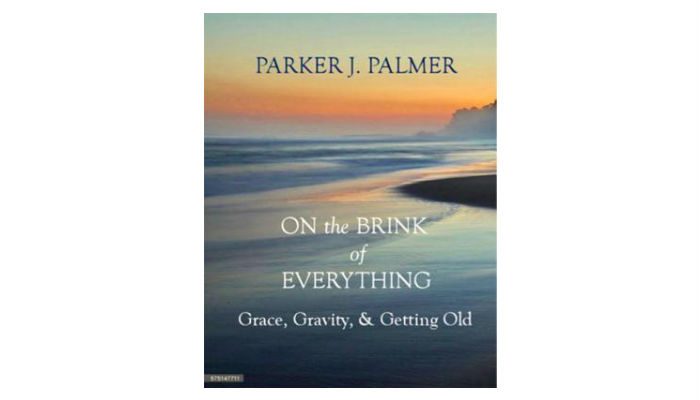
On the Brink of Everything

Are you “older?” So let me be more specific. Are you in your seventies? If you are then I think you will find this bookish weapon useful. If not then you still may find some wisdom in it. In Parker Palmer’s book, “On The Brink of Everything,” I encountered a way of looking at nature and mountains as sources of hope as well as viewing life as a gift.

I write this on my seventy-fourth birthday so I am well on my way to being considered “old.” However, Palmer writes this book at the age of eighty. So I consider him my senior.

On the Brink of Everything, review by Bill Montgomery

On the Brink of Everything, review by Bill Montgomery

Support for Climbing Mountains

Throughout the book he writes some gems that should be mentioned like this one: “One advantage of age is the chance it gives us to learn and relearn until we know.” What is something I have learned and relearned? You need to keep moving forward!

He says when he is with elders with some mobility problem whose world has shrunk to the size of their TV room it is “as if I’m with the walking dead.” So get outdoors and climb mountains while you can.

Palmer says, “Spend time in the natural world, as much time as you can. Nature constantly reminds me that everything has a place, nothing need be excluded. That “mess” on the forest floor – like the messes in my own life – has an amazing integrity and harmony to it.” He goes on to say that paying attention to how wilderness overcomes devastation “has helped me see how suffering can serve as a seedbed for renewal.” There is just so much to learn on the mountains!

On The Brink of Everything

That is such a perfect title to describe life after death in my opinion. I don’t know if that is what Palmer meant by it, but I see it as a way to remind us that the closer we get to death, the closer we are to the brink. After the brink is “everything.”

Palmer says, “Nothing makes me more grateful for life – even in hard times – than remembering it’s a pure gift I didn’t earn and won’t have forever. Nothing motivates me more strongly to pay it forward than knowing that the time to share a gift is when I have it in hand.”

As I age I am more thankful for this life and those that made it possible.

Filed Under: Bookish Weapons, Featured, Ideas to Stay on Offense Tagged With: adversity, aging, Bookish Weapons, self-help

Bookish Weapon Number Seven

July 13, 2019 by Bill Montgomery Leave a Comment

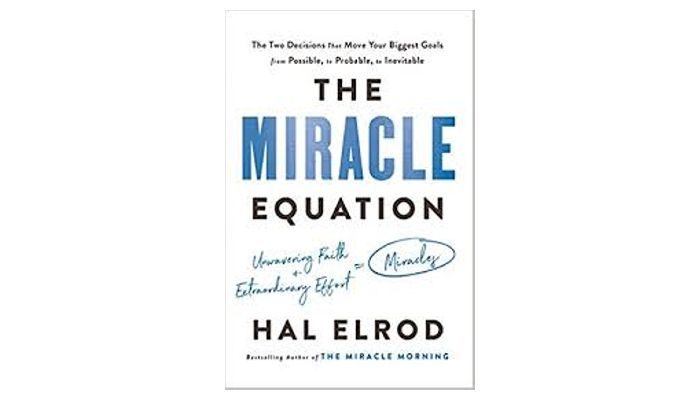
The Miracle Equation, review by Bill Montgomery

In his excellent book, “The Miracle Equation,” Hal Elrod devotes an entire chapter on my favorite idea from his book. That is a lot of space so this post may be a little longer than others. Let’s take a closer look at his chapter four – Becoming Emotionally Invincible.”

“How is that even possible,” I thought, as I read the title to this chapter. Who has that kind of Superman power? According to Elrod, we all do, but he certainly has developed it in a way others have not.

The Miracle Equation, review by Bill Montgomery

The Miracle Equation, review by Bill Montgomery

It’s All Your Fault

The way I see it is, at the core, we are talking about personal responsibility here. Elrod makes a statement that is worth quoting. Actually he makes a lot of them and I will be quoting and quoting and quoting. Here is the first. “Every painful emotion the you have ever felt, are feeling now, and will ever feel in the future was, is, and will be self-created by you and is completely optional.” That last part is tough. Optional? You feel what you feel don’t you?

Hal says that we all “have the power to stop self-creating negative emotions and live free from emotional pain…that is what it means to be become emotionally invincible.”

Rules

Have you read, “The Five Second Rule,” written by Mel Robbins? Good book. You should read it, but it is not the rule we will be discussing here. There are lots of rules. Sometimes it is hard to keep them all straight.

Hal Elrod’s rule is the five minute rule. He says he came up with this rule after a car accident as he lay in his hospital bed. The light bulb moment was that he made a decision to accept his new reality unconditionally and it only took him five minutes to come to this acceptance. Then he remembered the five minute rule his old boss had taught him that states the you can complain for five minutes about something that went wrong, but that’s it.

So the idea is when something happens like breaking your leg. You can bitch and moan for five minutes and then you need to accept the reality of it. Hal’s boss said the when the five minutes were up you needed to say, “Can’t change it” out loud. Isn’t that powerful? How many times has something happened to you that you had no control over changing and you got all upset for hours? Days? Months? This is a wake up call for all of us.

Let It Go

You are gong to have positive and negative emotions your whole life. Any tools you can muster to manage the negative ones helps you. This is a bookish weapon the helps you stay on offense.

Hal says, “..”all emotional pain that we have ever experienced, are experiencing now, or will ever experience in the future is self created by our resistance to our reality.” He goes on to say, “…it is the degree to which we resist our reality-the degree to which we wish or want something that is out of our control to be different-that determines the degree of emotional pain we experience.”

The idea is to let it go. You don’t have to like it, but let it go. Besides, you have probably heard a version of the story about the farmer who had something unfortunate happen to him and is told by his friends that this is so bad. It turns out in the story the it was actually good. Then something else would happen that looked good and it turned out to lead to something bad. Hal says, “You can’t accurately judge an experience as “good” or “bad” in the moment.”

Hal asks how we can tell if something is out of our control and can’t be changed. It is anything that has already happened. So he says to accept life before it happens. Not just what has happened, but what will happen. Now when are you going to start using this?

Filed Under: Bookish Weapons, Featured, Ideas to Stay on Offense Tagged With: adversity, Bookish Weapons, self-help

  • « Previous Page
  • 1
  • …
  • 10
  • 11
  • 12
  • 13
  • Next Page »

Live the Life You Deserve

* indicates required

Attacking Adversity

[the_ad id=”192″]

Recent Posts

More Book Summaries

It has been some time since I have done any book reviews here, but that will be changing. Also, hiking season is almost here so more pictures. I will be turning 80 in a few months so it should be … [Read More...]

Go Hiking And Build Your Best Life

Hiking for me is the best part of living the life I want. Being in nature, challenging my body, moving. If you hike you know it can become an important part of your life. At 78 I ask myself, “Will … [Read More...]

Bookish Weapon Number Seventy-Three

Arthur Brooks has written a book that not only includes useful advice but I really like the cover which includes mountains and someone (I imagine it is me) standing on top of one. What better … [Read More...]

Copyright © 2026 · Log in

X
Subject:
Message:
Ajax loader
Share with friends
Share on Twitter Share
Share
Share on Facebook Share
Share
Share on Linkedin Share
Share
Share on Reddit Share
Share
Share on Pinterest Share
Share
Share on Digg Share
Share
Share on Tumblr Share
Share
Share on Whatsapp Share
Share
Share on Weibo Share
Share
Share on Stumbleupon Share
Share
Share on Flipboard Share
Share
Share on Email Share
Share
Share on Print Share
Share